

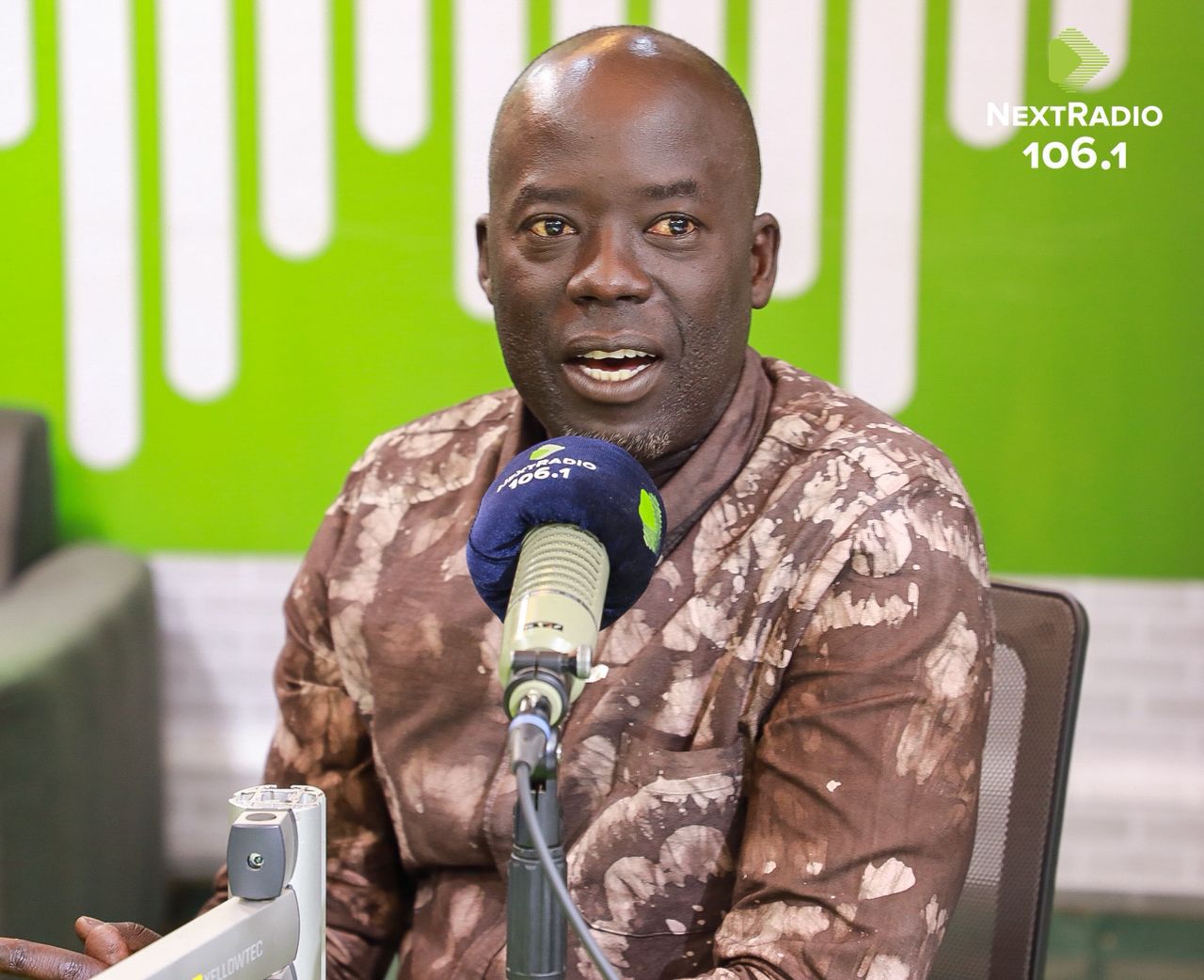
Former Aruu County Member of Parliament Odonga Otto has raised concerns about the structure and functioning of Uganda’s Parliament, calling for deeper constitutional reforms and questioning the performance of the current legislature.
Speaking to Canary Mugume during Next Big Talk hosted by Next Radio on Saturday, Otto revisited long-standing debates about the separation of powers and accountability within government institutions.
Otto referenced a constitutional proposal previously introduced by the late Onapito Ekomoloit, which sought to prevent ministers from simultaneously serving as Members of Parliament.
According to the former four-term legislator, the proposal aimed to reinforce the separation of powers by requiring any MP appointed to Cabinet to vacate their parliamentary seat, triggering a by-election.
Otto said the proposal deserved renewed debate and suggested that the issue should be addressed at the highest levels of Parliament.
He also questioned the current arrangement in which the Speaker of Parliament retains their constituency seat while presiding over the legislature.
“Why, for heaven’s sake, should a Speaker of Parliament also be an MP?” Otto asked, arguing that in many jurisdictions individuals cease to represent a constituency once they assume the role of Speaker.
Beyond institutional structure, Otto raised concerns about Uganda’s public debt management. He said legislation had been passed setting limits on national borrowing, stating that the law stipulates the country’s public debt should not exceed 50 percent of Gross Domestic Product.
Otto warned that breaching such thresholds could expose the country to serious risks in the event of a default. He cited the experience of Sri Lanka, where a debt crisis resulted in severe economic and political turmoil, as an example of what could happen when borrowing levels become unsustainable.
In a controversial remark about institutional accountability, Otto argued that the constitutional mandate of the Office of the Auditor General of Uganda to oversee government expenditure and guide Parliament’s financial oversight had not been effectively enforced.
He suggested that the only institution capable of “whipping” Parliament into accountability would be the military.
Responding to a question from Mugume about how the current legislature would be remembered, Otto offered a blunt assessment of the Parliament of Uganda.
He said the 11th Parliament could be remembered for what he described as a culture of rapid wealth accumulation among legislators.
“There are no rules, as long as you don’t kill anyone,” Otto said.
Otto’s remarks come as the 11th Parliament approaches its scheduled dissolution on April 24, 2026, with lawmakers currently focusing on reviewing the Auditor General’s report and processing the national budget.
Under Uganda’s budget cycle, the process begins in December with the submission of the National Budget Framework Paper to Parliament. Parliamentary committees review the framework between January and February before the House approves it later in February.
In March, ministers present policy statements alongside draft budget estimates, which are scrutinised by parliamentary committees in April.
Debates on the annual budget estimates and the passage of tax and revenue bills normally take place in May, with Parliament required to give its first approval of the national budget by May 31.
The process concludes in June when the Minister of Finance delivers the national budget speech and Parliament passes the Appropriation Act and remaining revenue laws by June 30.
However, with the 11th Parliament set to dissolve in April, questions have emerged about whether all stages of the process, including committee scrutiny, debates and final approvals, can realistically be completed within the remaining time.
Beyond the budget, Parliament still has several legislative items pending consideration. These include the National Legal Aid Bill 2022 introduced by Kumi Municipality MP Silas Agon, the Contracts Farming Bill 2023 brought forward by Kimanya-Kabonera MP Abed Bwanika, and the Magistrates Court Amendment Bill 2026.
Other outstanding proposals include the Constitutional Amendment Bill 2024, the Human Resource Management Professional Bill 2025 introduced by Worker’s MP Margaret Rwabushaija, the Copyright and Neighboring Rights Amendment Bill 2025, the Forensic and Scientific Analytical Services Bill 2025, and the National Drug and Health Products Authority Bill 2025.
Also awaiting consideration is the Khadhi Court’s Bill 2024 introduced by Bugiri Municipality MP Asuman Basalirwa.
As the legislative calendar narrows ahead of dissolution, the central question remains whether the 11th Parliament can complete its work before the deadline or leave the unfinished business to the incoming 12th Parliament.
